
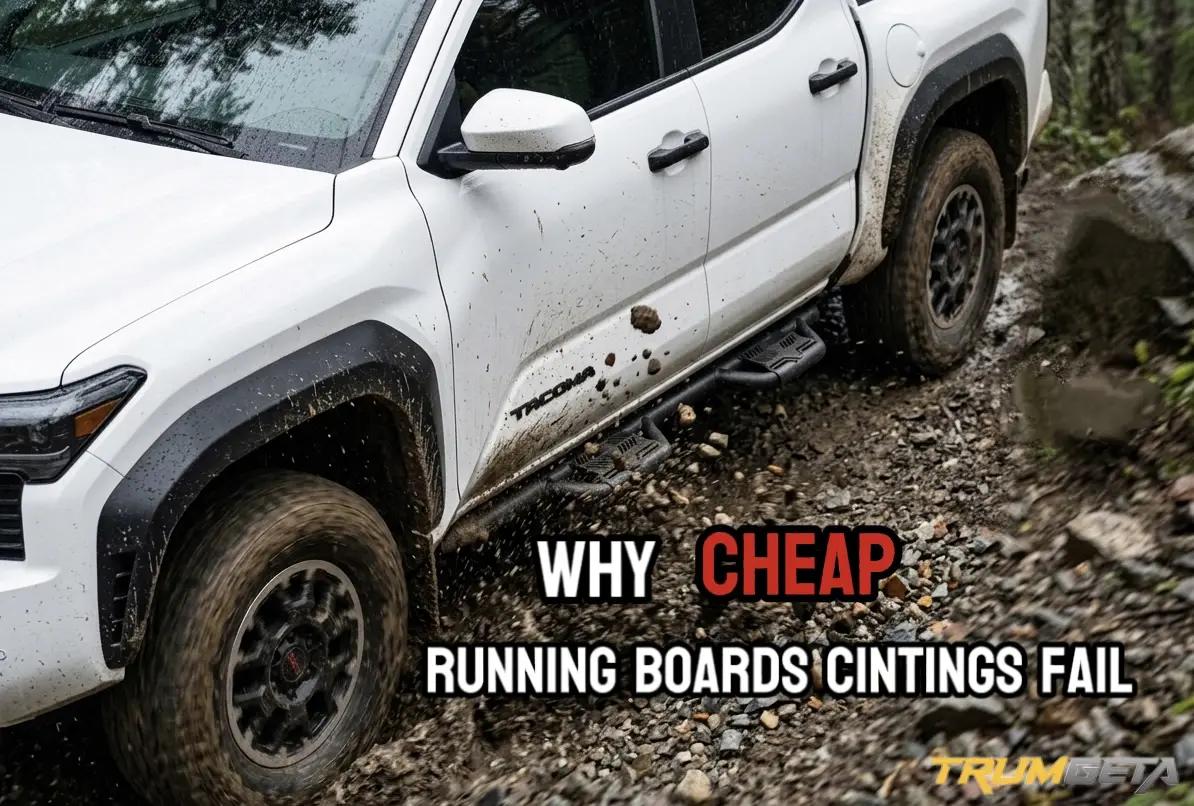
If you’ve ever browsed the forums or scrolled through Amazon for a pair of side steps, you’ve seen them: sleek, black, and surprisingly affordable running boards. Out of the box, they look identical to the premium gear that costs three times as much.
But as any seasoned off-roader or heavy-duty truck owner will tell you, the finish is where the real battle is won or lost.
In the world of working trucks and overlanding rigs, "cheap" isn't just about the price tag—it’s about the inevitable orange streaks of rust that appear after a single winter or a weekend on the trails. Here is the science of why standard coatings fail and why your truck deserves better.

1. The Deception of "Industrial" Powder Coating
Most entry-level running boards use a standard static powder coating. In a controlled showroom, it looks great. But powder coating is essentially a thin layer of plastic resin baked onto the metal.
The problem? It’s brittle.
When your truck frame flexes during off-roading, or when a stray rock kicked up by your 35-inch tires strikes the step, that brittle plastic shells and develops microscopic cracks. You won’t see them at first, but moisture and road salt will.
2. The "Tunneling Effect": Rust’s Secret Weapon
Once a standard coating is breached, a phenomenon known as sub-film corrosion (or tunneling) begins.
Because powder coating doesn't chemically bond to the steel, water gets trapped between the metal and the finish. It "tunnels" underneath the surface, eating away at the steel while the coating hides the damage. By the time you notice the paint bubbling and peeling, the structural integrity of the step is already compromised. It’s not just an eyesore; it’s a safety hazard.
3. The Torture Test: Beyond the Pavement
Trucks that "work hardest" face conditions that standard finishes weren't designed to handle:
Gravel Sandblasting: On forest service roads or job sites, your tires act like sandblasters. A cheap finish will be stripped to bare metal in months.
Chemical Warfare: Northern road salts and coastal salt air are incredibly corrosive. Standard finishes thin out at the sharp edges of the steps—exactly where rust likes to start.
Thermal Expansion: Metal expands and contracts with temperature. Cheap coatings don't have the elasticity to move with the metal, leading to delamination and flaking.
4. The Solution: Why Auxchemic® Changes the Game
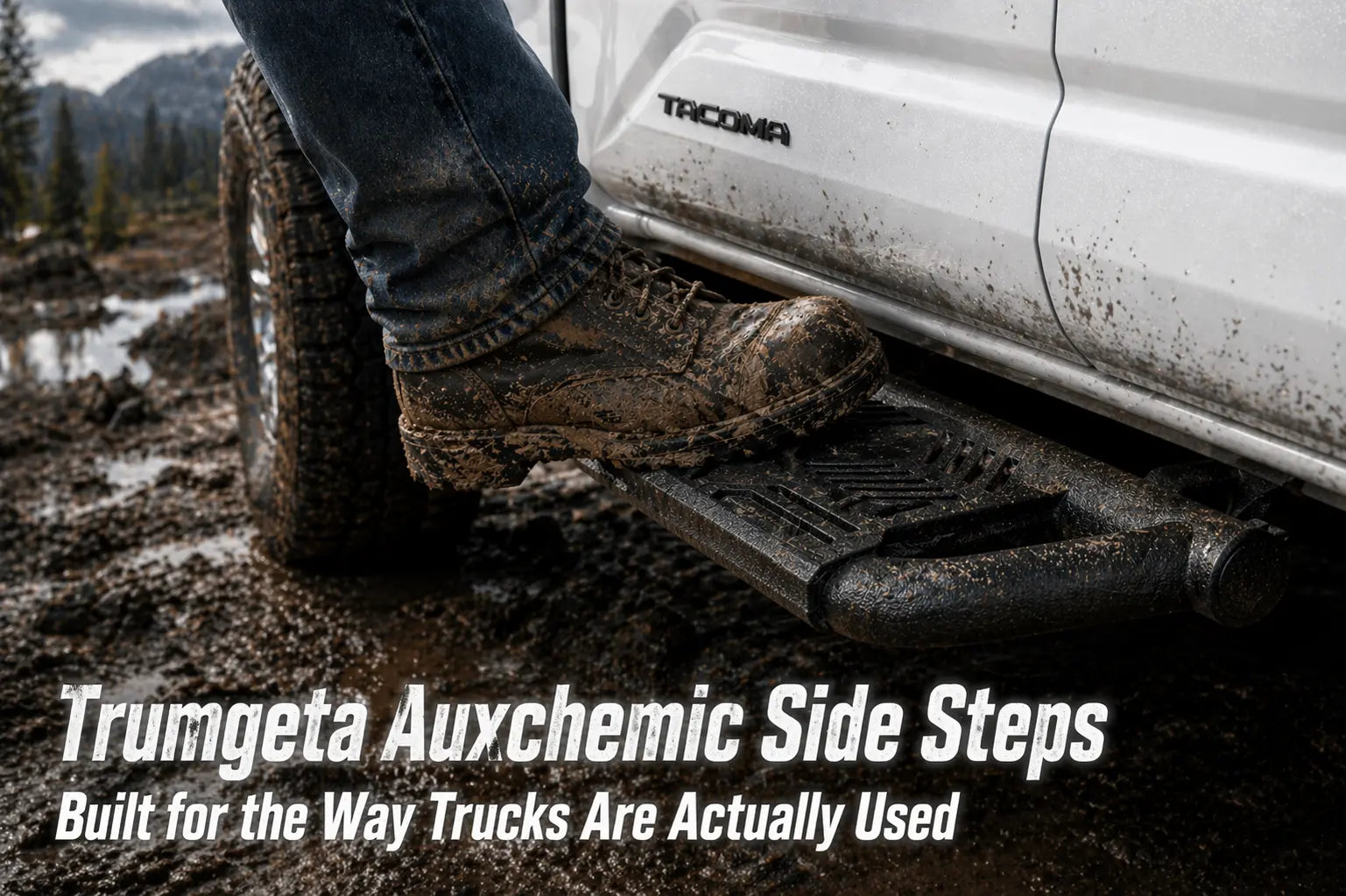
This is where advanced tech like Auxchemic® Polyurea Coating comes in. Unlike a "suit of clothes" that sits on top of the metal, this industrial-grade coating acts like a second skin.
Impact Absorption: Instead of cracking like glass, Auxchemic® is elastomeric. It absorbs the energy of a rock strike and bounces back, keeping the seal intact.
360° Seamless Armor: The multi-stage application process ensures that every weld and sharp edge is fully encapsulated. There are no "weak spots" for salt to enter.
Extreme Longevity: Originally engineered for high-end bedliners and industrial tanks, this tech is built to outlast the truck itself.

5. The Bottom Line: Buy Once, Cry Once
There’s an old saying in the truck community: "Buy once, cry once."
You can spend $200 on a pair of cheap steps and spend your weekends sanding off rust and hitting them with rattle-can bedliner every spring. Or, you can invest in a coating engineered for the environment your truck actually lives in.
If your truck is a tool—not a mall crawler—don't settle for a finish that quits when the going gets tough.


Leave a comment
This site is protected by hCaptcha and the hCaptcha Privacy Policy and Terms of Service apply.